Dan Coyne

Solutions Architect · AI, Cloud & Integrations

I'm a solutions architect who likes being in the customer meeting — and staying close enough to the technology to build the prototype myself. I've spent my career turning real business problems into cloud platforms, integrations, and increasingly AI products, then taking them past the architecture diagram into software people actually use.

What I do

01

Understand the problem

I start with the people who have the problem — customers, owners, the folks doing the work. The requirements that matter usually aren't the ones in the original ask.

02

Design the solution

Then I turn that into an architecture: cloud services, APIs, integrations, identity, data, connected devices, AI — whichever combination the problem actually calls for.

03

Build when it makes sense

I stay hands-on enough to prototype the risky parts myself, sometimes all the way to production. Ideas get validated a lot faster when someone in the room can build.

Selected work

Sear

Everything you cook, in one place

In TestFlight, preparing for App Store
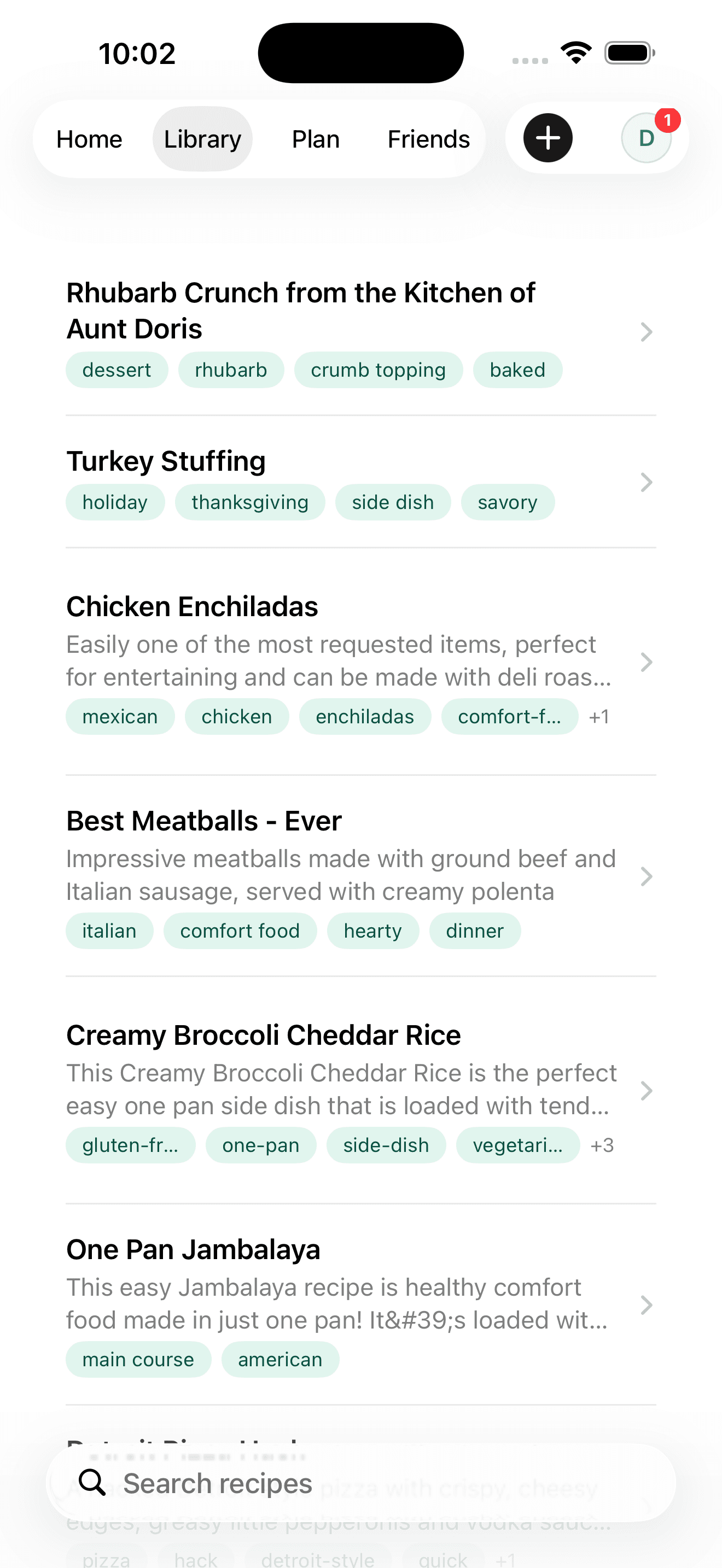
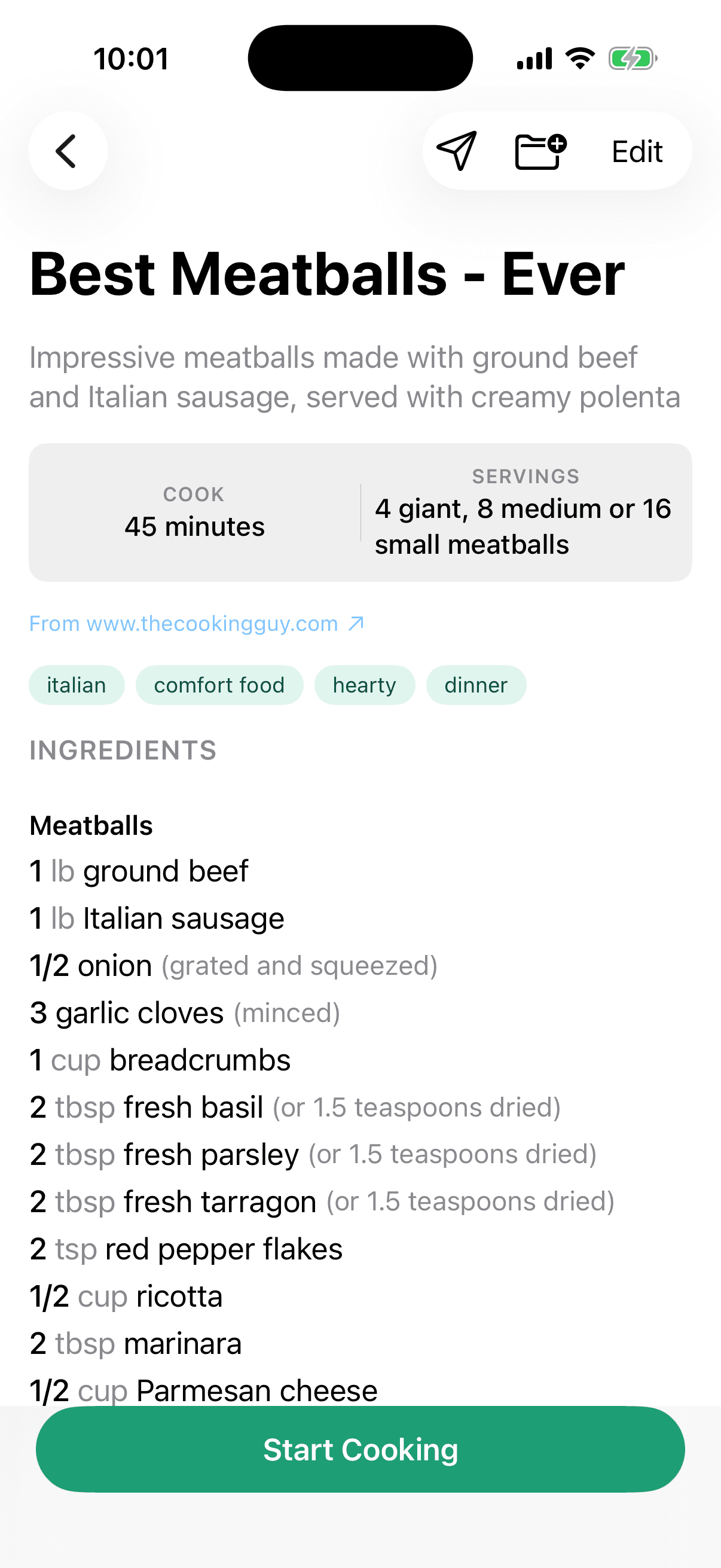
Recipes scatter — food blogs, screenshots, cookbook pages, texts from family. Sear gives them one home. Point it at a photo, a screenshot, or a URL and it produces a clean, structured recipe you can organize into collections, plan a week around, shop from, and cook from at the stove.

I designed and built the whole product: the native SwiftUI app, the web backend, accounts and sign-in, push notifications, sharing with friends, and the moderation and account-deletion plumbing Apple requires before it lets a social app ship.

  • URL imports parse a site's structured recipe data first and only fall back to AI when they have to — cheaper, faster, and more reliable than sending everything to a model
  • Every model call is measured for cost and quality, so the choice of which model handles extraction is backed by data rather than a default
  • Sign in with Apple and Google, a friends-and-sharing layer, and the trust-and-safety work most side projects skip
  • Swift
  • SwiftUI
  • Next.js
  • TypeScript
  • Prisma
  • PostgreSQL
  • Claude API
  • Vercel
Sear recipe library
Recipe library
Sear recipe detail view
Recipe detail
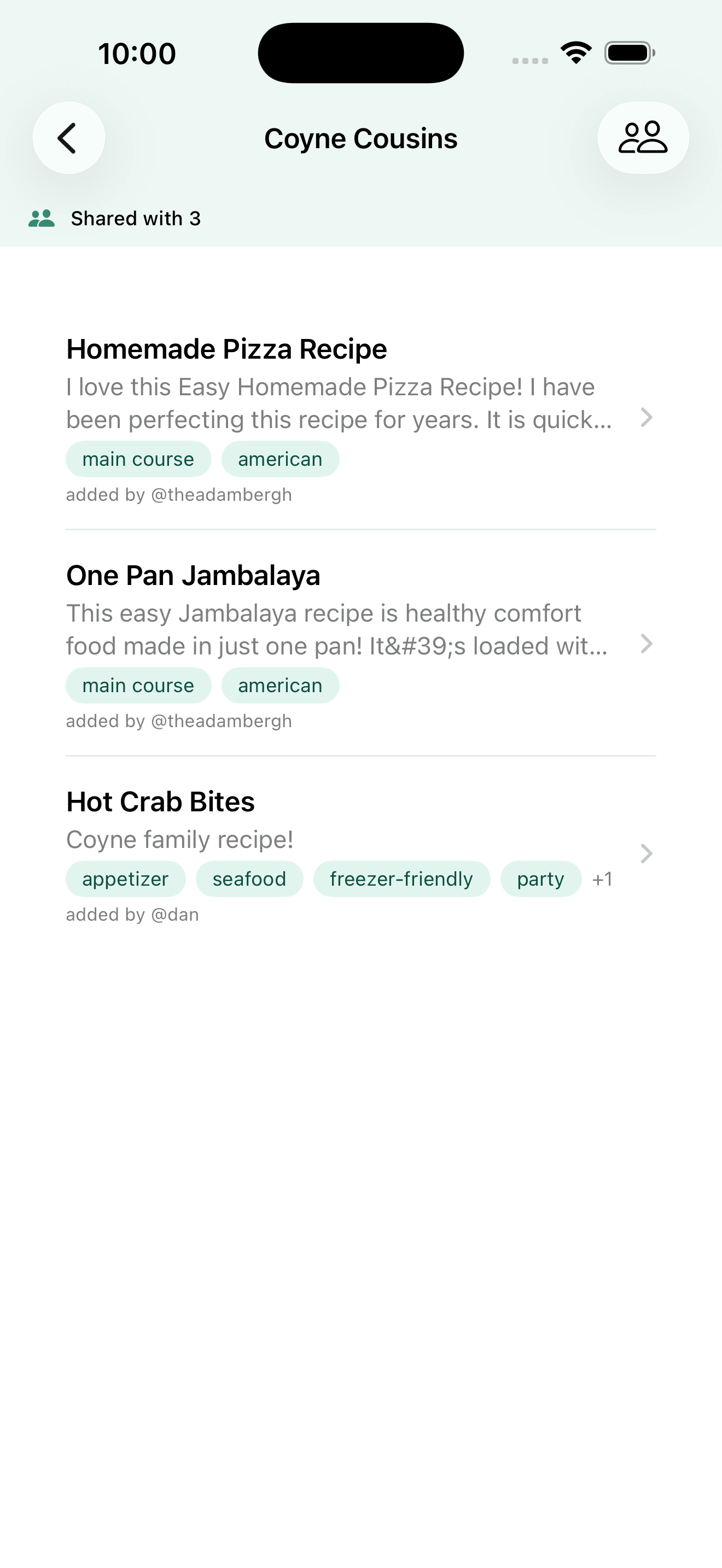
Sear collections
Collections
Sear friends and sharing
Friends & sharing

Gas Guys

The software that runs a real fuel-delivery business

In production, operating daily

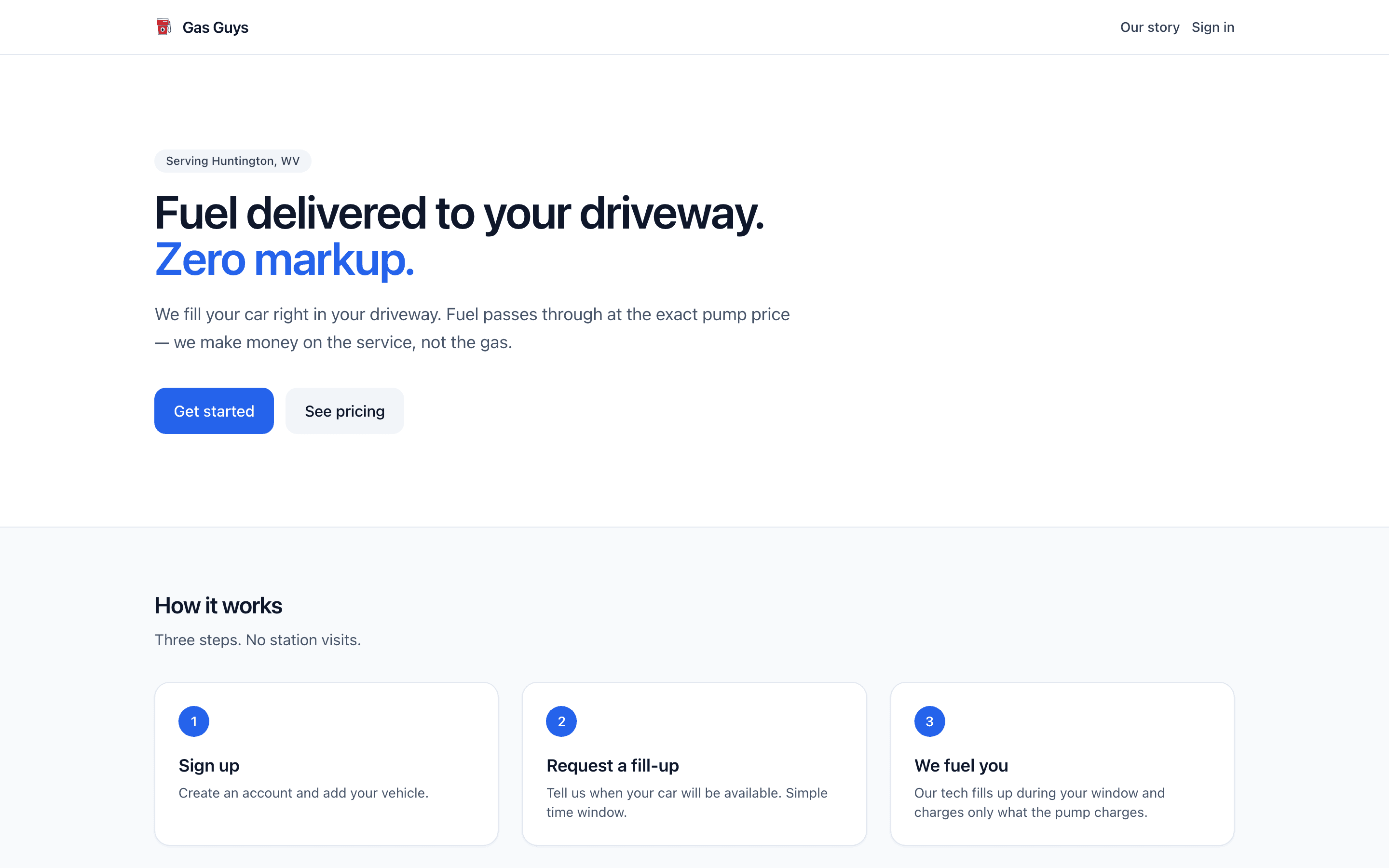
Gas Guys delivers fuel to people's driveways in Huntington, WV. Running that business means dispatch, scheduling, billing, and technicians in the field — so I sat down with the owner, learned how the operation actually worked, and built the platform around those workflows.

One codebase serves three kinds of user: customers request fill-ups and manage their vehicles and billing, technicians work a job queue with photo proof of every delivery, and the owner handles scheduling, approvals, fuel pricing, and customer messaging. It has run in production through months of real deliveries, and the parts that field use proved wrong got rebuilt.

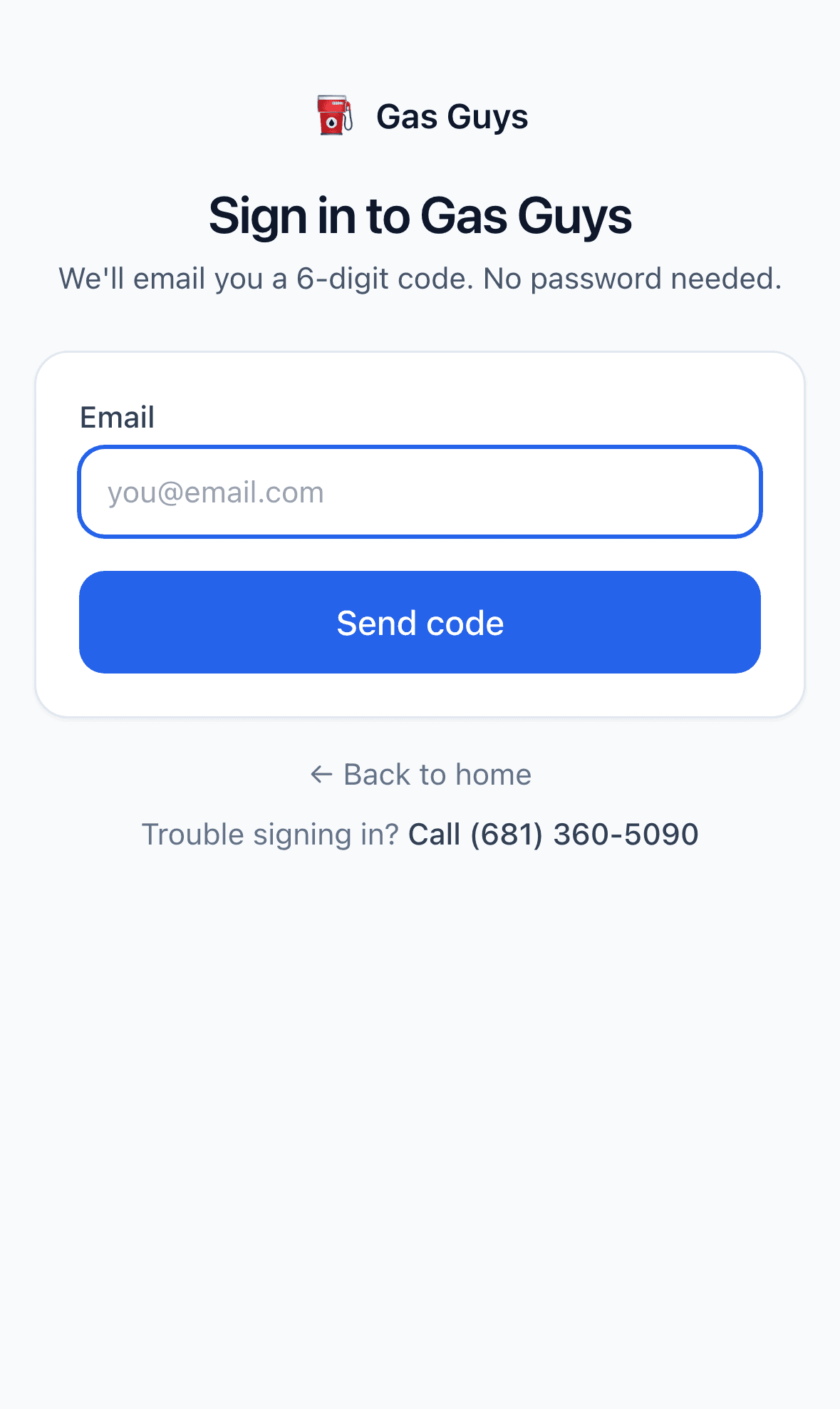
  • Passwordless sign-in — customers get a six-digit email code, because nobody should need to manage a password to get fuel delivered
  • Stripe subscriptions and metered billing with the full payment lifecycle handled: card on file, receipts, failed payments, past-due follow-up
  • Fifteen transactional email flows so customers and technicians always know what's happening without anyone making a phone call
  • Next.js
  • TypeScript
  • Prisma
  • PostgreSQL
  • Stripe
  • Resend
  • Vercel
gasguyswv.com
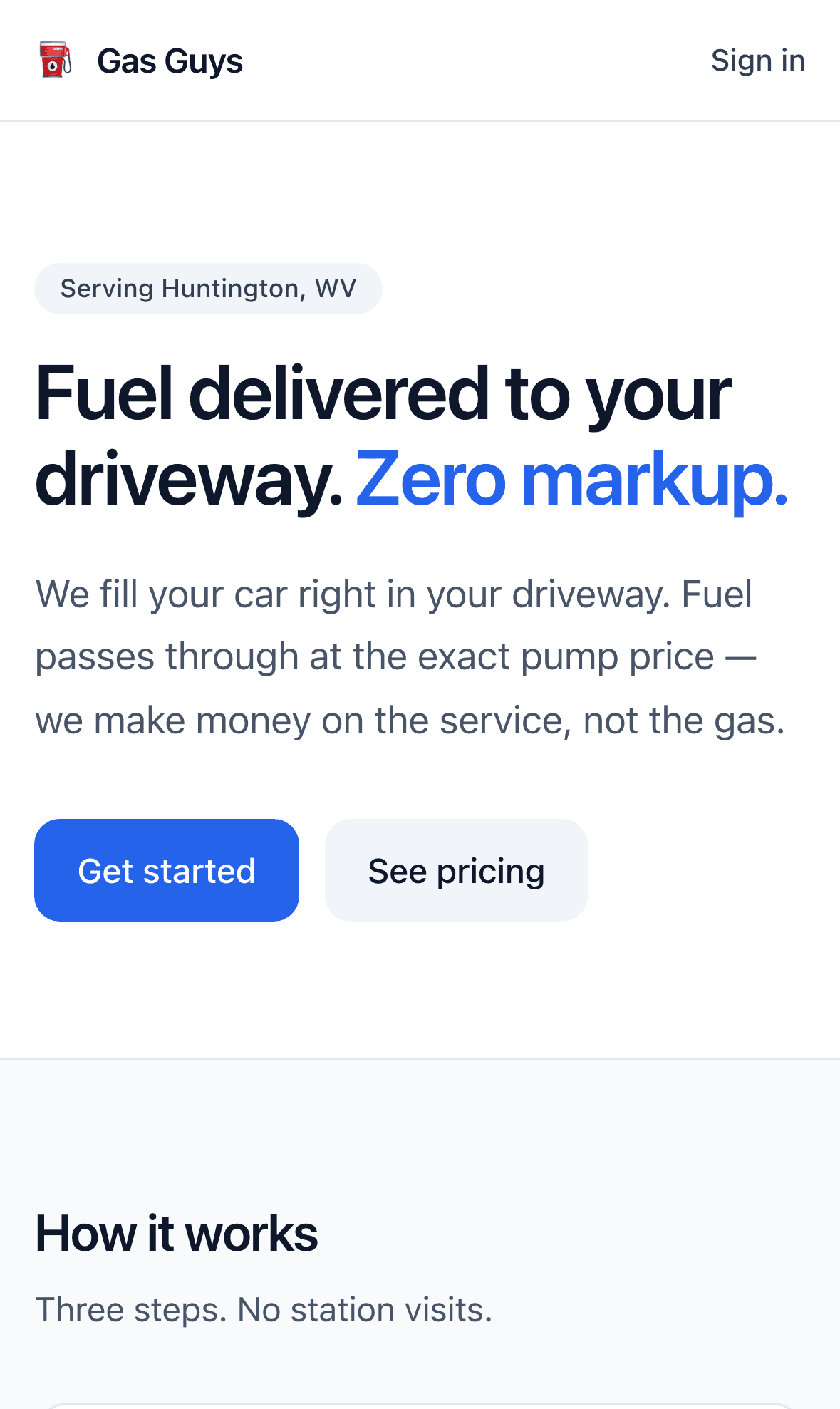
Gas Guys landing page
Gas Guys mobile landing page
Mobile-first PWA
Gas Guys passwordless sign-in
Passwordless sign-in

Pocket Caddie

A caddie built from your own numbers

First TestFlight build

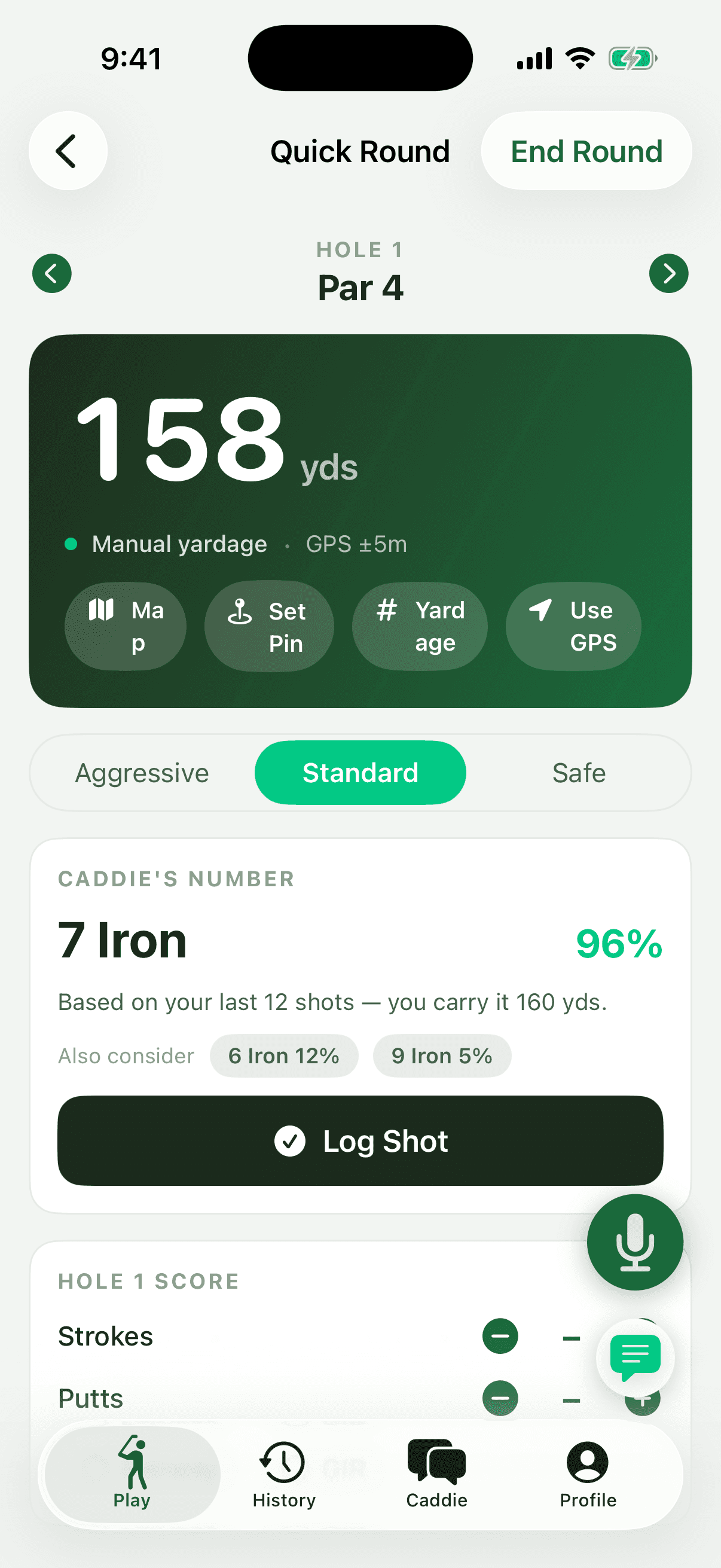
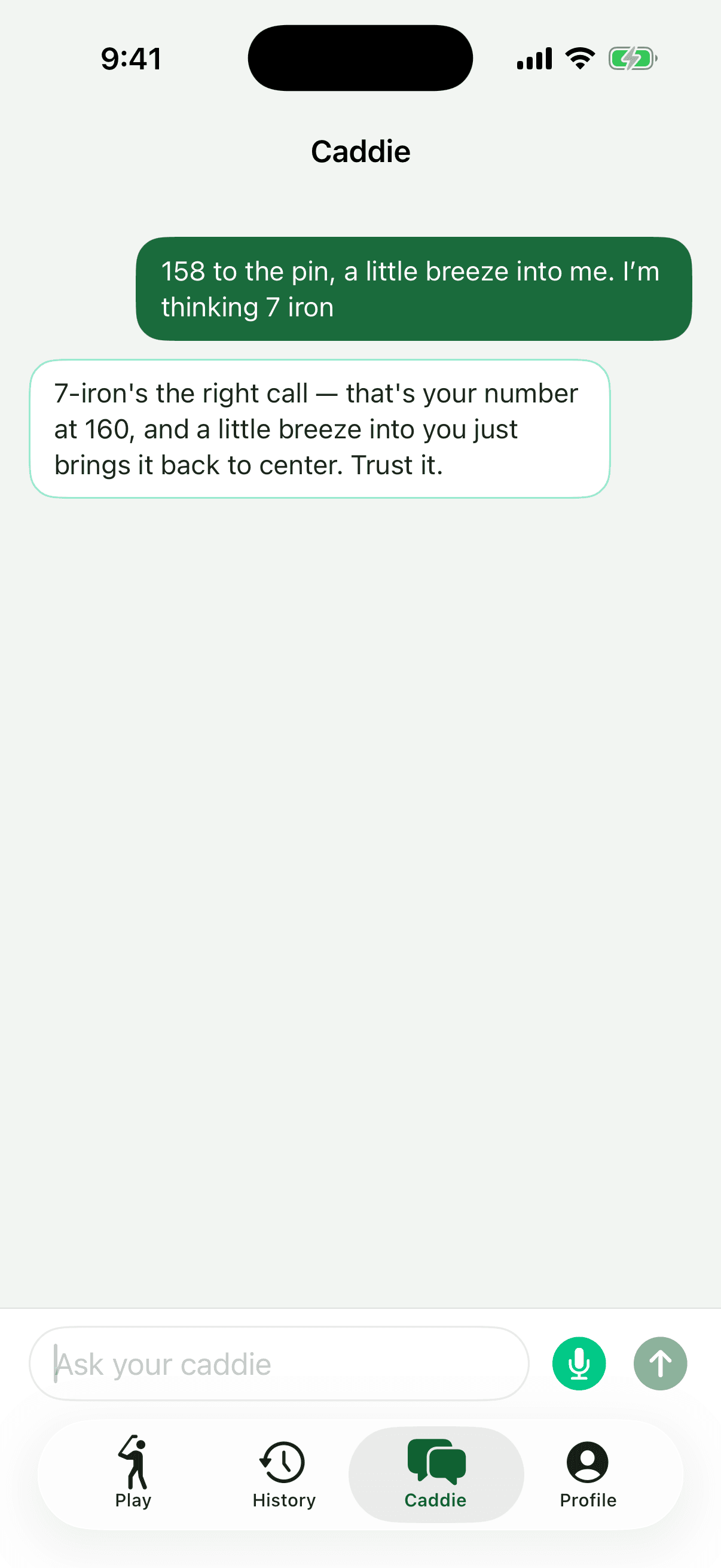
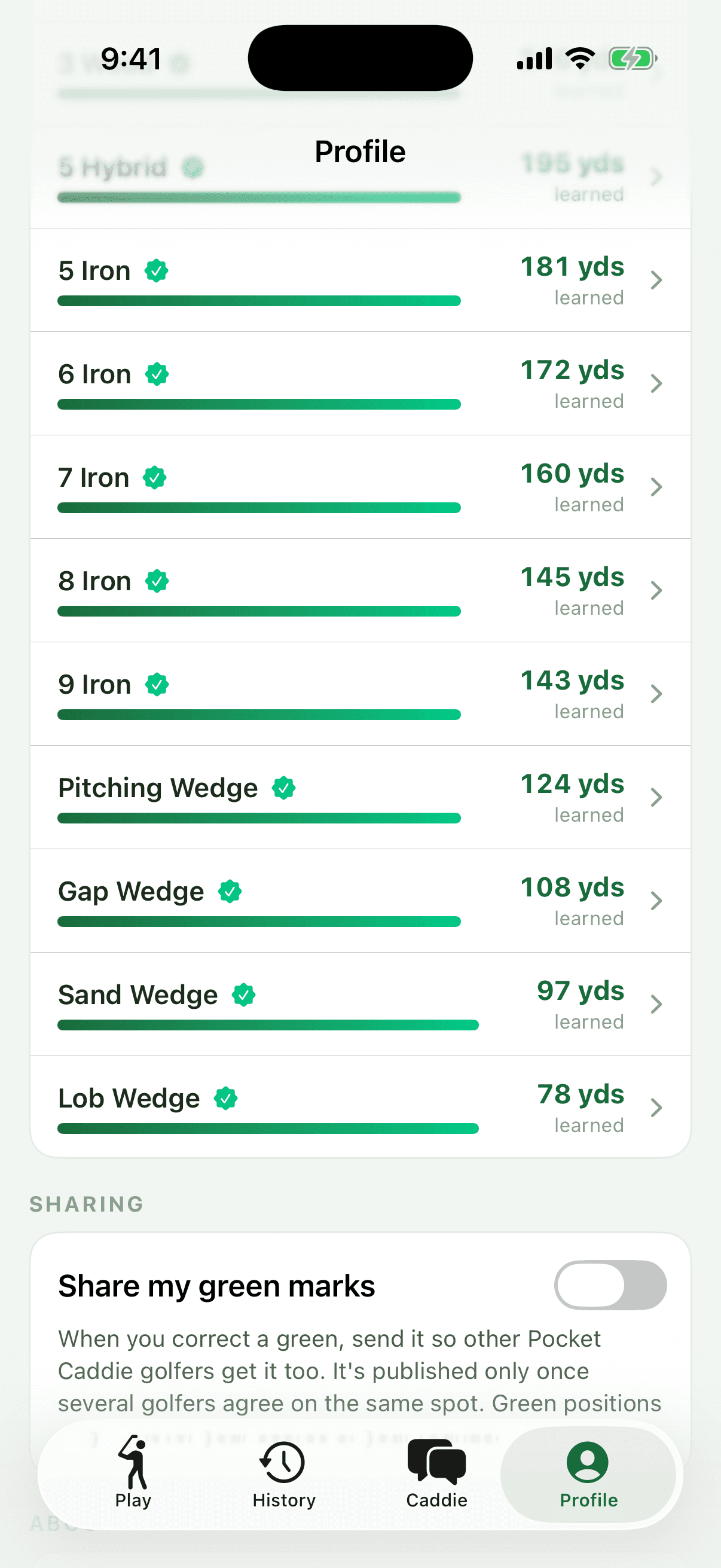
Golf apps will tell you it's 158 yards to the pin. They won't tell you what to hit, because they don't know how far you actually hit anything. Pocket Caddie learns your real carry distances from shots you log and recommends a club with an honest confidence number — plus a conversational caddie you can talk to mid-round.

I built the iOS app, the backend, and the course data pipeline. The club engine is intentionally simple math that runs entirely offline, because golf courses have terrible signal — the AI layer is a bonus when the network cooperates, never a dependency.

  • Log shots, scores, and putts by voice, hands-free, using on-device speech recognition
  • The backend proxies the AI with strict rate limits that shut down on failure — no API key ships in the app
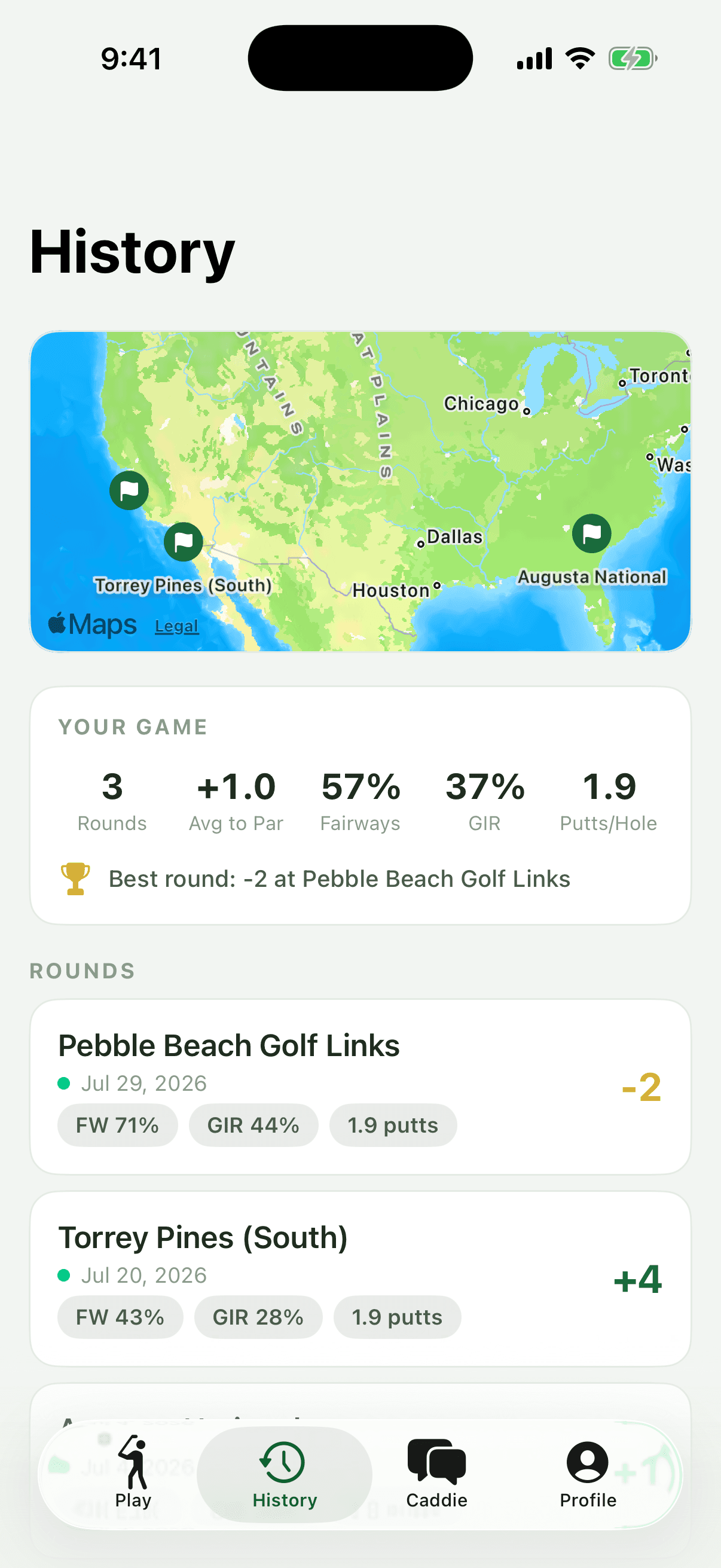
  • Round history, per-club learning progress, and stats computed from your own shots — no made-up numbers
  • Swift
  • SwiftUI
  • SwiftData
  • TypeScript
  • PostgreSQL
  • Claude API
  • Vercel
Pocket Caddie in-round club recommendation
Caddie's number, with confidence
Pocket Caddie conversational AI caddie
Conversational caddie
Pocket Caddie round history and stats
Rounds & stats
Pocket Caddie per-club learned distances
Clubs learned from your shots

Enterprise & professional work

The projects above are mine top to bottom. My day job is customer-facing architecture — here's the kind of problem I get handed professionally.

Connected industrial tools — Haltec GO

Industrial customers wanted visibility into torque tools and automated inflators in the field. I architected the global platform connecting them to mobile apps, data pipelines, and reporting — and owned its AWS architecture, security model, and identity strategy as it grew.

Identity federation for the NFL

Lead technical contact for Haltec's integration into the NFL's technology environment: Auth0-to-Okta SAML/OIDC federation, an API integration design with Zebra's ball-tracking system, and a security gap analysis against ISO 27001, SOC 2 Type II, and TISAX.

An internal AI platform people actually use

Sales and operations kept routing the same questions to engineering. I built the Haltec Business System — quoting, lead capture, trade-show tooling, and AskDave, a retrieval assistant over product data — used daily by roughly 35 employees and absorbing 20–30 engineering requests a month.

Cloud modernization for ERP environments

Architecture reviews and modernization roadmaps for legacy ERP estates — data lakes, pipelines, and API integration patterns across AWS, Azure, and OCI.

Experience

Technical Sales Architect · Haltec Corporation

June 2025 – Present
  • Technical lead for discovery and solution architecture across 10+ active enterprise implementations — the technical counterpart to customers, sales, and product from the first meeting through deployment.
  • Advise on integrations spanning APIs, identity, cloud infrastructure, connected devices, data workflows, and AI.

Cloud Solutions Architect · Haltec Corporation

March 2023 – June 2025
  • Architected Haltec GO, the company's connected-tool platform, and owned its AWS architecture, security model, and identity strategy.
  • Led the data-layer migration from DynamoDB to Aurora and the move from a homegrown password system to Auth0.

Cloud Solution Specialist, Data & Analytics · ERP Suites

August 2020 – March 2023
  • Architecture reviews and cloud modernization recommendations for legacy ERP environments across AWS, Azure, and OCI, plus data-lake and pipeline design for analytics workloads.

Sales / Market Research Intern · Amazon Web Services

Summer 2019
  • Authored a whitepaper on HIPAA- and HITECH-aligned cloud onboarding for healthcare startups.

Technical toolkit

Cloud & Architecture

AWS · Azure · PostgreSQL · Aurora · DynamoDB · S3 · Lambda · CloudFront · IAM & KMS · Neon · Vercel

APIs, Integrations & Identity

REST APIs · Webhooks · SAML / OIDC · Auth0 · Okta · JWT · Role-based access control · Stripe · EDI/X12 · Data pipelines

AI & LLMs

Anthropic Claude API · OpenAI API · Claude Code · Vercel AI SDK · RAG & vector search · Multimodal pipelines · Structured outputs · Prompt & system design · Model evaluation & cost tracking

Building

TypeScript · JavaScript · Swift · SwiftUI · SQL · React · Next.js · Node.js · Prisma · Tailwind CSS · Progressive Web Apps

Education

Ohio University

B.B.A., College of Business, 2020

Double major: Management Information Systems & Marketing